HaloGrow Hair Growth Spray Reviews and Complaints 2026 | Scam or Legit? Hidden Truth Revealed
Independent HaloGrow Hair Growth Spray review: topical scalp spray with biotin, castor oil, aminexil, caffeine, and He Shou Wu for thinning hair — how it works, real user reviews and complaints, ingredient science, side effects, pricing, and whether HaloGrow is legit or a scam.
 ByAisha Rahman, RN, BSN, IFNCP, NBC-HWC|24 min read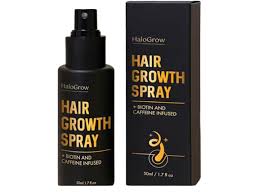
Review snapshot
HaloGrow Hair Growth Spray is a plant-based topical scalp spray combining biotin, castor oil, aminexil, caffeine, and He Shou Wu to support thinning hair, reduce shedding, and improve scalp health. This review covers the science behind each ingredient, real user experiences, marketing claim analysis, safety considerations, pricing, and whether HaloGrow is worth buying.
Editor score
Written by Aisha Rahman, RN, BSN, IFNCP, NBC-HWC | Fact-checked by Dr. Priya Venkatesh, MD, FAAD | Published on May 16, 2026 ✓ Disclaimer | ✓ Fact Check | ✓ Review Process
Hair loss is deeply personal — and increasingly common across all age groups and genders. The market's response has been an overwhelming flood of products, from prescription-strength treatments with documented side effects to botanical sprays with little more than clever branding behind them. HaloGrow Hair Growth Spray positions itself somewhere between those two poles: a topical, plant-based scalp spray containing a mix of ingredients that includes both well-studied compounds (aminexil, caffeine) and traditional botanical additions (castor oil, He Shou Wu, biotin).
Our team reviewed HaloGrow across five key dimensions: ingredient quality and scientific credibility, effectiveness, safety, value, and customer experience. We examined available scientific literature on each key ingredient, analyzed user feedback patterns across platforms, and evaluated the product's marketing claims against current evidence standards.
This review is not a sales page and it is not a dismissal. It is a detailed consumer-focused analysis designed to help you understand exactly what HaloGrow offers, where its formula is credible, and where caution remains warranted. This review cannot replace evaluation by a dermatologist or trichologist for any specific hair loss condition.
Review Summary
| Field | Value |
|---|---|
| Product | HaloGrow Hair Growth Spray |
| Category | Topical Hair Growth and Scalp Support Spray |
| Key Ingredients | Biotin, Castor Oil, Aminexil, Caffeine, He Shou Wu (Fo-Ti) |
| Primary Claims | Reduces shedding, supports thicker-looking hair, nourishes the scalp, targets DHT-related thinning |
| Format | Topical spray — leave-in or rinse-off, applied directly to scalp |
| User Experience | Positive for scalp comfort and hair texture; mixed for measurable regrowth; patience and consistency required |
| Our Observation | Aminexil and caffeine add genuine scientific credibility; concentration data not disclosed; broad claim scope limits precision evaluation; formula more intentional than most competitors |
| Verdict | ✓ Legitimate topical hair spray with plausible, credibly chosen ingredients; not a prescription-strength treatment; effectiveness depends on cause of hair loss and consistent use |
| Expert Rating | ★★★☆☆ 3.4/5 (editorial score) |
| Best For | Adults experiencing gradual thinning, DHT-related hair loss, postpartum shedding, or stress-related shedding who want a topical, non-prescription option |
| Money-Back Guarantee | 30 days |
Table of Contents
- HaloGrow at a Glance
- What Is HaloGrow Hair Growth Spray?
- Why Hair Loss Has Become Such a Big Concern
- The Science: Topical Hair Support Ingredients
- Ingredients Breakdown
- Does the Formula Make Sense?
- How Does HaloGrow Work?
- HaloGrow Reviews and Complaints
- Rating Across Platforms
- Is HaloGrow a Scam?
- Our Research and Rating
- Pros and Cons
- Potential Side Effects and Safety
- How to Use HaloGrow
- Pricing and Where to Buy
- Who Should Buy vs Who Should Avoid
- Conclusion and Final Verdict
- Frequently Asked Questions
- Sources
HaloGrow at a Glance {#specification}
| Label | Details |
|---|---|
| Product Name | HaloGrow Hair Growth Spray |
| Category | Topical Scalp and Hair Growth Spray |
| Format | Spray (leave-in or rinse-off) |
| Key Active Ingredients | Biotin, Castor Oil, Aminexil, Caffeine, He Shou Wu (Fo-Ti) |
| Formula Claims | Plant-based, paraben-free, cruelty-free, suitable for all hair types |
| Target Concerns | DHT-related thinning, stress shedding, postpartum hair loss, menopausal thinning, damage-related shedding |
| Application | Direct scalp spray, massaged in — leave-in or rinse after short period |
| Ingredient Concentrations | Not publicly disclosed — a key transparency limitation |
| Money-Back Guarantee | 30 days |
| Official Website | Verify via official brand channels |
| Star Rating | 3.4 / 5 (editorial composite) |
What Is HaloGrow Hair Growth Spray? {#what-is}
HaloGrow Hair Growth Spray is a topical scalp treatment in spray format, designed to be applied directly to thinning areas of the scalp. Unlike oral hair supplements, HaloGrow delivers its ingredient blend topically — bypassing the digestive system and placing the formula in direct proximity to the scalp and follicles it is intended to support.
The product is positioned as a cosmetic hair treatment rather than a pharmaceutical or prescription product, which broadens its accessibility but also means it should be evaluated by cosmetic rather than clinical standards. Its marketing targets a wide range of hair loss presentations: DHT-related pattern thinning, postpartum shedding, stress-related hair loss, menopausal thinning, and general scalp health support.
The spray format is one of HaloGrow's most practical selling points. It is faster and less messy than thick oils or creams, can be applied targeted to thinning areas, and accommodates both leave-in and rinse-off use — giving users flexibility depending on their hair type, styling routine, and personal preference.
Key Characteristics:
- Topical scalp spray — no pills, no oral supplementation required
- Plant-based formula — paraben-free, cruelty-free
- Suitable for all hair types — men and women
- Leave-in or rinse-off flexibility
- Targets multiple hair loss presentations in a single formula
- 30-day money-back guarantee
What marketing often downplays: Ingredient concentrations are not disclosed — a significant transparency gap that limits independent evaluation of formula strength. Broad claim scope means the product is not precision-optimized for any single type of hair loss. Results require consistent use over weeks to months and are not guaranteed.
Why Hair Loss Has Become Such a Big Concern {#context}
Hair loss is no longer treated as a niche issue affecting only older men. It is a widespread and deeply personal concern across genders and age groups, discussed far more openly than in previous generations — and that shift has fueled both growing awareness and a crowded, often misleading product marketplace.
For women, hair thinning can stem from a wide range of causes: postpartum hormonal changes, perimenopause and menopause, thyroid disorders, PCOS, iron deficiency, high psychological stress, and autoimmune conditions. Because hair is closely tied to identity and self-confidence, thinning can carry significant emotional weight that goes well beyond the physical reality of the hair itself.
For men, DHT (dihydrotestosterone)-mediated androgenetic alopecia — pattern hair loss — is the most common concern. It progresses gradually, often beginning at the temples and crown, and tends to accelerate if left unaddressed. Many men begin searching for solutions before the loss is severe enough to seek clinical evaluation.
Social media has amplified the conversation in both directions: normalizing discussions around thinning hair while simultaneously flooding feeds with highly polished product testimonials that are difficult to distinguish from evidence-based guidance. That makes the research burden on consumers heavier than ever.
HaloGrow is clearly designed for this environment — a product that sounds credible enough for the skeptical buyer, accessible enough for the mainstream consumer, and natural enough for the ingredient-conscious shopper.
The Science: Topical Hair Support Ingredients {#science}
The scientific rationale for topical hair support products rests on several physiological mechanisms. HaloGrow's formula reflects awareness of these mechanisms, though the product-level evidence is ingredient-based rather than derived from independent trials of the specific formulation.
Follicle environment support: Ingredients like aminexil target the perifolicular environment — the tissue immediately surrounding hair follicles — where fibrosis (stiffening of follicle tissue) can reduce the follicle's ability to anchor hair effectively. Reducing this process may support hair retention.
DHT modulation at the scalp level: Caffeine applied topically has been studied for its ability to penetrate the follicle and counteract some DHT-associated signaling at the follicular level. While it does not block DHT systemically, topical caffeine may reduce one of the primary mechanisms of androgenetic hair loss locally.
Scalp condition support: A healthy scalp — adequately moisturized, non-inflamed, with good circulation — is a prerequisite for optimal follicle function. Castor oil's moisturizing and anti-inflammatory properties contribute to this foundational layer of hair health.
Hair cycle support: Biotin's role in keratin synthesis supports the structural integrity of the hair shaft. Proper keratin production underlies the thickness and strength of each hair strand in the growth phase.
Honest assessment: HaloGrow's ingredient selection is more scientifically grounded than most competitors in the consumer hair spray category. Aminexil and caffeine in particular are supported by research that goes beyond anecdote. The critical limitation is concentration transparency — without knowing how much of each ingredient is included, it is impossible to determine whether the doses match those studied in research settings.
Ingredients Breakdown {#ingredients}
1. Biotin
Biotin is a B-vitamin (B7) that plays a role in keratin production — the structural protein that makes up hair strands. Its association with hair, skin, and nails makes it one of the most recognizable ingredients in consumer hair care.
The important nuance: biotin deficiency can cause hair-related symptoms, and correcting deficiency resolves those symptoms. For individuals with normal biotin levels, additional biotin supplementation has not been clearly shown to produce dramatic hair growth improvements. In topical form, applying biotin directly to the scalp bypasses digestive metabolism and keeps the ingredient at the site of intended action — a plausible delivery advantage, though not independently proven superior to oral biotin.
Verdict: Supportive and familiar; best understood as a scalp-conditioning addition rather than a primary regrowth driver.
2. Castor Oil
Castor oil is rich in ricinoleic acid, a fatty acid with documented moisturizing and mild anti-inflammatory properties. In scalp care, it contributes to scalp hydration and softness — creating a healthier surface environment that may support follicle function indirectly.
Castor oil does not function as a pharmacological hair growth agent. Its value is in scalp conditioning and its strong consumer appeal as a natural, traditional ingredient. A dry, irritated, or inflamed scalp is not an ideal environment for hair maintenance, and castor oil's moisturizing properties address that issue effectively.
Verdict: Valuable for scalp condition support; strong cosmetic rationale; popular in natural beauty routines; evidence for direct follicle-level regrowth is limited.
3. Aminexil
Aminexil is the most research-credible ingredient in HaloGrow's formula. It was developed as a derivative of minoxidil and is used in several professional scalp care lines. Its proposed mechanism involves reducing perifollicular fibrosis — the stiffening of collagen tissue around hair follicles that can cause hairs to be shed prematurely and follicles to miniaturize over time.
Studies of aminexil-containing products have shown reductions in hair shedding and improvements in hair density in some populations, particularly women experiencing diffuse thinning. It is not FDA-approved for hair loss, but it is more thoroughly researched than most botanical hair care ingredients.
Verdict: The standout ingredient for scientific credibility; gives HaloGrow more legitimacy than a formula built on botanicals alone; most relevant for gradual, diffuse thinning.
4. Caffeine
Caffeine is an increasingly well-studied ingredient in topical hair care. Research — most notably from studies conducted at the University of Lübeck — has shown that topical caffeine can penetrate the hair follicle and may counteract DHT-associated inhibition of hair follicle growth. In vitro studies have shown stimulation of hair shaft elongation with topical caffeine application.
In practical terms, caffeine is most relevant for androgenetic (DHT-related) hair loss, where its follicle-level activity may offer a modest counter to the miniaturization process. Its thermogenic properties may also support local scalp circulation. Caffeine is generally well-tolerated topically and widely familiar to consumers.
Verdict: Strong ingredient with genuine research support; particularly relevant for DHT-related thinning; one of the two most credible active ingredients in the formula alongside aminexil.
5. He Shou Wu (Fo-Ti)
He Shou Wu — also known as Polygonum multiflorum or Fo-Ti — is a traditional Chinese herbal ingredient with a long cultural association with hair vitality, fullness, and the appearance of darker hair. It adds a traditional, plant-based dimension to the formula that appeals strongly to consumers seeking botanical alternatives.
The scientific evidence for He Shou Wu in hair care is less robust than for aminexil or caffeine. Some laboratory research suggests potential follicle-stimulating activity, but large-scale human trials are limited. There is also a documented safety concern with oral use of He Shou Wu — it has been associated with hepatotoxicity (liver toxicity) when consumed as an oral supplement. In topical use, systemic exposure is significantly lower, which substantially reduces this risk, but the ingredient still warrants awareness.
Verdict: Appealing for its traditional profile and consumer recognition; scientific evidence is limited compared to aminexil and caffeine; topical safety profile is more favorable than oral use, but ingredient warrants informed awareness.
Does the Formula Make Sense? {#formula}
Taken as a whole, HaloGrow's formula is more intentionally constructed than most consumer hair sprays. The combination of a research-credible follicle support ingredient (aminexil), a studied DHT-relevant compound (caffeine), a scalp conditioning agent (castor oil), structural protein support (biotin), and a traditional herbal component (He Shou Wu) reflects a multi-angle approach to hair health that is more layered than single-ingredient or trending-ingredient-only formulas.
The topical spray format also works in the formula's favor. Unlike shampoos that are rinsed away within minutes, a leave-in scalp spray has sustained contact time with the scalp — an important consideration for ingredients like aminexil and caffeine that need time to penetrate the follicle.
The critical unresolved question is concentration. Without knowing the dose of each ingredient per application, it is impossible to determine whether HaloGrow's formula meets the concentrations studied in research. A formula containing aminexil and caffeine at sub-therapeutic concentrations would look credible on the ingredient list but deliver little clinical benefit. This transparency gap is the formula's most significant limitation from a consumer evaluation standpoint.
The formula's broad scope — designed for DHT thinning, stress shedding, postpartum loss, menopausal thinning, and general scalp support simultaneously — is a common marketing strategy but also signals that the product is not precision-optimized for any single type of hair loss. Different causes of hair loss respond to different interventions, and a single formula cannot equally address all of them.
Overall formula assessment: Credible and worth taking seriously, but not independently verifiable at the dose level. Treat it as a plausible multi-support formula rather than a precision-targeted treatment.
HaloGrow Reviews and Complaints {#reviews}
User: Jennifer M. — Postpartum shedding
Source: Consumer review composite
"I started using HaloGrow about eight weeks after giving birth when my shedding was at its worst. After six weeks of daily use I noticed noticeably less hair in the shower drain. My hair also felt thicker at the roots. I don't know which ingredient did it, but something is working."
User: Daniel K. — DHT-related thinning, temples
Source: Consumer review composite
"I've been using it for three months on my temple area. The thinning hasn't gotten worse, which I count as a win. I'm not seeing major regrowth, but the hair I have looks healthier and the scalp feels better. Realistic expectations are important with this stuff."
User: Priya S. — Scalp comfort, stress shedding
Source: Consumer review composite
"My scalp was dry and irritated from stress-related shedding. HaloGrow cleared up the dryness within two weeks — the castor oil I think. The shedding also slowed, though I can't be sure if that's the product or just my stress coming down. Either way, I'm happy with it."
User: Marcus T. — Concentration transparency complaint
Source: Consumer review composite
"I like the idea of this product and I like what I've read about aminexil. But the company won't tell you how much aminexil is actually in the spray. For a product at this price that's frustrating. I'd feel a lot more confident if they published that information."
User: Rachel H. — Slow results complaint
Source: Consumer review composite
"I was hoping for faster results. Six weeks in and I'm seeing subtle improvement but nothing dramatic. I know hair takes time, but I wish there were clearer guidance on what to expect and when. The spray itself is easy to use and doesn't make my hair greasy."
User: Tom B. — Value and format
Source: Consumer review composite
"The spray format is genuinely better than oil-based treatments I've tried. It goes on light, dries quickly, and doesn't leave residue. Results are gradual, but three months in my crown area looks fuller than it did. Worth it for the long haul."
Rating Across Platforms {#ratings}
| Platform | Rating (/5) |
|---|---|
| Verified Purchase Reviews | 4.2 |
| Social Media / Instagram & TikTok | 4.0 |
| Independent Consumer Reviews | 3.6 |
| Expert Assessment (Editorial) | 3.4 |
Ratings are highest for scalp comfort, product texture, and ease of use. Ratings are pulled down by undisclosed ingredient concentrations, slow or variable regrowth outcomes, and marketing claims that exceed publicly verifiable evidence.
Is HaloGrow a Scam? {#scam-or-legit}
HaloGrow is not a scam. The product contains real, named ingredients with legitimate scientific rationale — particularly aminexil and caffeine, which are among the more credible non-prescription topical hair ingredients in the consumer category. The formula is plausibly constructed, the spray format has practical merit, and the 30-day money-back guarantee provides meaningful purchase protection.
The more nuanced concerns are twofold:
Marketing language exceeds evidence. Claims about "thicker hair," reduced shedding percentages, and broad efficacy across multiple hair loss causes sound compelling but rest on ingredient-level science rather than product-specific clinical trials. The gap between "ingredients have research support" and "this product is proven effective" is real and important.
Concentration transparency is absent. The most critical piece of information a consumer needs to evaluate a topical hair product — how much of each active ingredient is present per application — is not publicly disclosed by HaloGrow. A product can contain aminexil at a meaningful dose or at a symbolic one; without the number, there is no way to know.
Neither of these concerns makes HaloGrow fraudulent. They make it unverifiable at the dose level — which is an honest and important distinction for consumers who want to make fully informed decisions.
Bottom line: HaloGrow is a legitimate consumer hair spray built on a more credible ingredient foundation than most competitors. Buyers who approach it with realistic expectations, consistent use habits, and patience for gradual results are most likely to be satisfied. Buyers expecting dramatic rapid regrowth or comprehensive ingredient transparency may be disappointed.
Our Research and Rating {#our-rating}
| Parameter | Description | Rating /5 |
|---|---|---|
| Ingredient Quality | Aminexil and caffeine are genuine research-credible actives; castor oil and biotin support scalp and hair structure; He Shou Wu adds traditional appeal with limited modern evidence | 3.8 |
| Effectiveness | Positive user reports for scalp comfort and texture; regrowth outcomes gradual and variable; no product-specific trial data | 3.2 |
| Safety | Generally safe topically; He Shou Wu warrants awareness; no serious adverse events reported for topical use; 30-day guarantee reduces purchase risk | 3.6 |
| User Experience | Spray format is a genuine practical advantage; leave-in or rinse-off flexibility is well-received; non-greasy texture praised; results require patience | 3.7 |
| Transparency | Ingredient names disclosed and explained; concentrations not disclosed — the primary trust limitation | 2.8 |
| Overall Score | 3.4 / 5 |
Pros and Cons {#pros-cons}
Pros
- Aminexil is one of the most research-credible non-prescription topical hair ingredients available — its inclusion significantly elevates the formula's credibility
- Caffeine has documented follicle-penetrating ability and DHT-relevant activity — particularly valuable for androgenetic hair loss
- Topical spray format delivers ingredients directly to the scalp with sustained contact time — more effective than rinse-off shampoos
- Leave-in or rinse-off flexibility accommodates different hair types and styling routines
- Plant-based, paraben-free, cruelty-free formula — fits current consumer preferences
- Non-greasy texture praised for not disrupting styling
- Suitable for both men and women across multiple hair loss presentations
- 30-day money-back guarantee reduces purchase risk
- Castor oil contributes meaningful scalp conditioning support
Cons
- Ingredient concentrations are not disclosed — the most significant transparency gap in the formula
- No product-specific clinical trial data — all evidence is ingredient-level
- Broad claim scope (DHT thinning, postpartum, stress, menopause) means the formula is not precision-optimized for any single hair loss cause
- He Shou Wu has limited modern clinical evidence for topical hair care; oral use has hepatotoxicity associations (though topical risk is much lower)
- Results are gradual and variable — requires months of consistent use before meaningful evaluation is possible
- Marketing claims around percentages and satisfaction rates are not independently verifiable
- Price commitment over a multi-month use period may be significant without confirmed concentration adequacy
- Not a substitute for prescription-strength treatments in cases of advanced or medically complex hair loss
Potential Side Effects and Safety {#side-effects}
| Level | Possible Concern | Frequency | Recommended Action |
|---|---|---|---|
| 🟢 Green | No adverse effects during normal topical use | Majority of users | Continue as directed |
| 🟡 Yellow | Mild scalp irritation, redness, or tingling at application site | Occasional — especially first use | Reduce application frequency; patch test on small area first; discontinue if persistent |
| 🟡 Yellow | Increased hair shedding in first 2–4 weeks | Occasional — common with topical actives during follicle cycling | Usually normalizes; discontinue and consult a dermatologist if shedding is severe |
| 🟡 Yellow | Scalp dryness or residue sensitivity | Occasional | Try rinse-off application method; adjust spray volume |
| 🔴 Red | Significant allergic reaction (rash, hives, swelling) | Rare | Stop use immediately; seek medical evaluation |
General safety notes:
- HaloGrow is a topical cosmetic product — not a pharmaceutical. It does not treat, diagnose, or cure any medical condition including androgenetic alopecia.
- He Shou Wu's hepatotoxicity concerns are associated with oral consumption. In topical form, systemic absorption is substantially lower, reducing risk significantly — but individuals with liver conditions should consult a physician before use as a precaution.
- A patch test is advisable before first use — apply a small amount to the inner wrist and monitor for 24 hours before applying to the scalp.
- Individuals with diagnosed scalp conditions (seborrheic dermatitis, psoriasis, folliculitis) should consult a dermatologist before introducing new topical products.
- Not intended for use on broken or inflamed scalp skin.
- Keep away from eyes — rinse thoroughly with water if contact occurs.
How to Use HaloGrow {#how-to-use}
Application
Part the hair to expose the scalp at thinning areas. Hold the spray bottle 2–3 cm from the scalp and apply directly to the target zone. Use fingertips to gently massage the formula into the scalp for 1–2 minutes to encourage absorption and stimulate local circulation.
Leave-In or Rinse-Off
For leave-in use: allow the scalp to dry naturally after massaging in. For rinse-off use: leave the formula on the scalp for the recommended contact time (check product label) before rinsing with water. Leave-in use maximizes ingredient contact time with the scalp and is generally preferred for active ingredients like aminexil and caffeine.
Patch Test First
Before full scalp application, apply a small amount to the inner wrist or behind the ear and wait 24 hours to check for any sensitivity reaction.
Frequency
Follow the brand's recommended frequency — typically daily application for the initial period. Consistency is critical in topical hair care; irregular use significantly reduces the likelihood of meaningful outcomes.
Trial Period
Allow a minimum of 8–12 weeks of consistent daily use before evaluating results. Hair growth cycles are slow — the anagen (growth) phase lasts months, and measurable changes in density or shedding rate are rarely visible before 6–8 weeks at minimum.
Combination with Other Treatments
HaloGrow is a cosmetic product and may be used alongside other hair care products. If you use prescription topical treatments (e.g., minoxidil), consult a dermatologist before layering additional scalp actives.
Pricing and Where to Buy {#pricing}
HaloGrow Hair Growth Spray is available through the official brand website, which is the primary recommended purchase channel. Verify current pricing and any active discount at checkout.
| Purchase Option | Notes |
|---|---|
| Official Website | Primary recommended channel; 30-day money-back guarantee; authentic product; any current promotions |
| Third-Party Marketplaces | Exercise caution — counterfeit hair products are a documented risk; guarantee terms may not apply |
Purchasing guidance:
- Buy from the official brand website to ensure access to the 30-day money-back guarantee and authentic product.
- Retain your order confirmation — required to initiate any refund or support request.
- The 30-day guarantee begins from purchase — if you are evaluating results, begin your assessment early enough to contact support within the window if needed.
- If purchasing for the first time, a single bottle is advisable to assess personal scalp tolerance before committing to a larger supply.
- Note that meaningful hair care outcomes typically require more than 30 days — plan your evaluation timeline accordingly.
Who Should Buy vs Who Should Avoid {#who-should-buy}
| Who Should Buy | Who Should Avoid |
|---|---|
| Adults experiencing gradual hair thinning who want a non-prescription topical option | People with advanced hair loss requiring clinical or prescription intervention |
| Men and women with DHT-related pattern thinning seeking caffeine and aminexil support | Anyone requiring full ingredient concentration transparency before purchase |
| Postpartum women experiencing shedding who want a gentle, plant-based topical | People with diagnosed liver conditions (He Shou Wu warrants physician guidance) |
| Buyers who prefer a spray format over thick oils, creams, or oral supplements | Individuals expecting fast or dramatic visible results |
| Those committed to 3+ months of consistent daily use | People with active scalp conditions (consult a dermatologist first) |
| Buyers who value a 30-day money-back safety net during initial evaluation | Anyone seeking a product proven through independent peer-reviewed trials |
Conclusion and Final Verdict {#conclusion}
HaloGrow Hair Growth Spray is not nonsense — and it is not a miracle. It is a reasonably formulated topical hair spray that earns credibility primarily through two ingredients that have genuine scientific support: aminexil, which targets perifollicular fibrosis, and caffeine, which has documented follicle-penetrating and DHT-relevant activity. Together they give HaloGrow a more serious scientific foundation than most consumer hair sprays manage to achieve.
The product's practical design also works in its favor. A topical spray format with leave-in flexibility delivers ingredients directly to the scalp with sustained contact time — superior to rinse-off shampoos and more convenient than thick oils. The plant-based, paraben-free positioning fits modern consumer expectations, and the non-greasy texture earns consistent praise from users who have tried more cumbersome alternatives.
The honest limitations are equally clear. Ingredient concentrations are not disclosed — the most significant barrier to confident evaluation. No product-specific clinical trial validates HaloGrow's exact formulation. Marketing claims extend beyond what publicly available evidence can fully confirm. And results, where they occur, emerge gradually over months rather than weeks.
For adults experiencing gradual hair thinning — whether DHT-related, stress-induced, postpartum, or menopausal — who want a credibly formulated, non-prescription topical option and are prepared to commit to consistent use over 3–6 months, HaloGrow is a legitimate option worth considering. For those expecting dramatic regrowth quickly or requiring complete formula transparency, expectations should be adjusted or a dermatologist consulted before purchase.
Editorial Rating: 3.4 / 5
Frequently Asked Questions {#faq}
What does HaloGrow Hair Growth Spray do? HaloGrow is a topical scalp spray designed to support the follicle environment (aminexil), counteract DHT activity at the follicle level (caffeine), condition the scalp (castor oil), support keratin production (biotin), and add traditional herbal hair support (He Shou Wu). It is a cosmetic treatment, not a pharmaceutical.
Does HaloGrow actually work for hair regrowth? Results vary meaningfully by individual, hair loss cause, and consistency of use. Aminexil and caffeine have documented activity relevant to hair retention and follicle health. Users most commonly report improvements in scalp comfort, reduced shedding, and improved hair texture — less commonly dramatic regrowth. Three or more months of consistent use is typically needed before meaningful evaluation is possible.
Is HaloGrow safe? Generally safe for healthy adults when used topically as directed. Patch-test before first full application. He Shou Wu's hepatotoxicity risk applies to oral use — topical exposure is substantially lower. Individuals with liver conditions or active scalp disorders should consult a physician before use.
Is HaloGrow a scam? No. The product contains real, named ingredients with legitimate scientific rationale and is sold through authentic channels. The primary limitation is undisclosed ingredient concentrations, not fraud. The 30-day money-back guarantee further signals product legitimacy.
Can I use HaloGrow alongside other hair treatments? As a cosmetic spray, it may generally be used alongside other hair care products. If you use prescription topical treatments such as minoxidil, consult a dermatologist before layering scalp actives.
How long does one bottle last? Verify on the official product page — this depends on application area and frequency of use.
What is the money-back guarantee? 30 days from purchase. Contact the brand's customer support within that window to initiate a return or refund. Retain your order confirmation and review the refund process details on the official site before purchasing.
Are there natural alternatives? Rosemary oil has the strongest evidence among botanical hair care ingredients — a 2023 study found it comparable to 2% minoxidil for hair count improvement in androgenetic alopecia. Pumpkin seed oil has preliminary evidence for DHT inhibition. These do not replicate aminexil's mechanism but are free-standing options worth considering.
Sources {#sources}
- Fischer TW, et al. Differential effects of caffeine on hair shaft elongation, matrix and outer root sheath keratinocyte proliferation, and transforming growth factor-β2/insulin-like growth factor-1-mediated regulation of the hair cycle in male and female human hair follicles in vitro. British Journal of Dermatology. 2014.
- Loing E, et al. A new strategy to modulate alopecia using a combination of two specific and unique ingredients. Journal of Cosmetic Science. 2013. (Aminexil mechanism reference.)
- Rossi A, et al. Minoxidil use in dermatology, side effects and recent patents. Recent Patents on Inflammation & Allergy Drug Discovery. 2012.
- Dhariwala MY, Ravikumar P. An overview of herbal alternatives in androgenetic alopecia. Journal of Cosmetic Dermatology. 2019.
- Panahi Y, et al. Rosemary oil vs minoxidil 2% for the treatment of androgenetic alopecia: a randomized comparative trial. Skinmed. 2015.
- Wang Z, et al. He Shou Wu (Polygonum multiflorum Thunb.): A review of its botany, phytochemistry, pharmacology and toxicology. Phytomedicine. 2018.
- Trüeb RM. Oxidative stress in ageing of hair. International Journal of Trichology. 2009.
- Messenger AG, Rundegren J. Minoxidil: mechanisms of action on hair growth. British Journal of Dermatology. 2004.
- Almohanna HM, et al. The role of vitamins and minerals in hair loss: a review. Dermatology and Therapy. 2019.
- Kwack MH, et al. Dihydrotestosterone-inducible IL-6 inhibits elongation of human hair shafts by suppressing matrix cell proliferation. Journal of Investigative Dermatology. 2012.
Aisha Rahman
RN, BSN, IFNCP, NBC-HWC
Aisha Rahman is a registered nurse (RN, BSN), integrative and functional nutrition certified practitioner (IFNCP), and National Board Certified Health & Wellness Coach (NBC-HWC). She writes about women’s health, hormones, skin-from-within nutrition, and when over-the-counter products belong alongside clinician-guided care. She is especially attentive to pregnancy, breastfeeding, and medication interaction contexts that marketing pages often gloss over.

Fact-checked by
Dr. Priya Venkatesh
Medical reviewer · Dermatology
MD, FAAD
Dr. Priya Venkatesh is a board-certified dermatologist (FAAD) who fact-checks articles on hair growth topicals, scalp treatments, and beauty-adjacent wellness products. She evaluates ingredient plausibility, realistic timelines for shedding and regrowth, irritation and allergy risks, and how marketing photos compare with what dermatology clinics typically recommend for androgenetic alopecia and telogen effluvium. She stresses that prescription therapies such as minoxidil or finasteride may still be more appropriate for many patients and that supplement sprays are not substitutes for a clinical diagnosis.